EVE Online 2026 Strategy Guide: 10 Shifts That Stop You Being Easy Prey
Meta Description:
Learn the EVE Online 2026 strategy shifts that help pilots lose fewer ships, train smarter, earn more ISK, and make better decisions in PvP and PvE.
The biggest mistakes in EVE usually feel reasonable at first. You train the wrong skills to V, overinvest in ships you cannot afford to lose, and rely on habits that make you predictable at gates, stations, and trade hubs. Then the loss mails pile up and progress starts feeling slower than it should.
This EVE Online 2026 strategy guide is built to fix that. Instead of repeating generic beginner advice, it focuses on the decision-making shifts that help pilots protect ISK, train with more flexibility, and become much harder to punish in real gameplay.
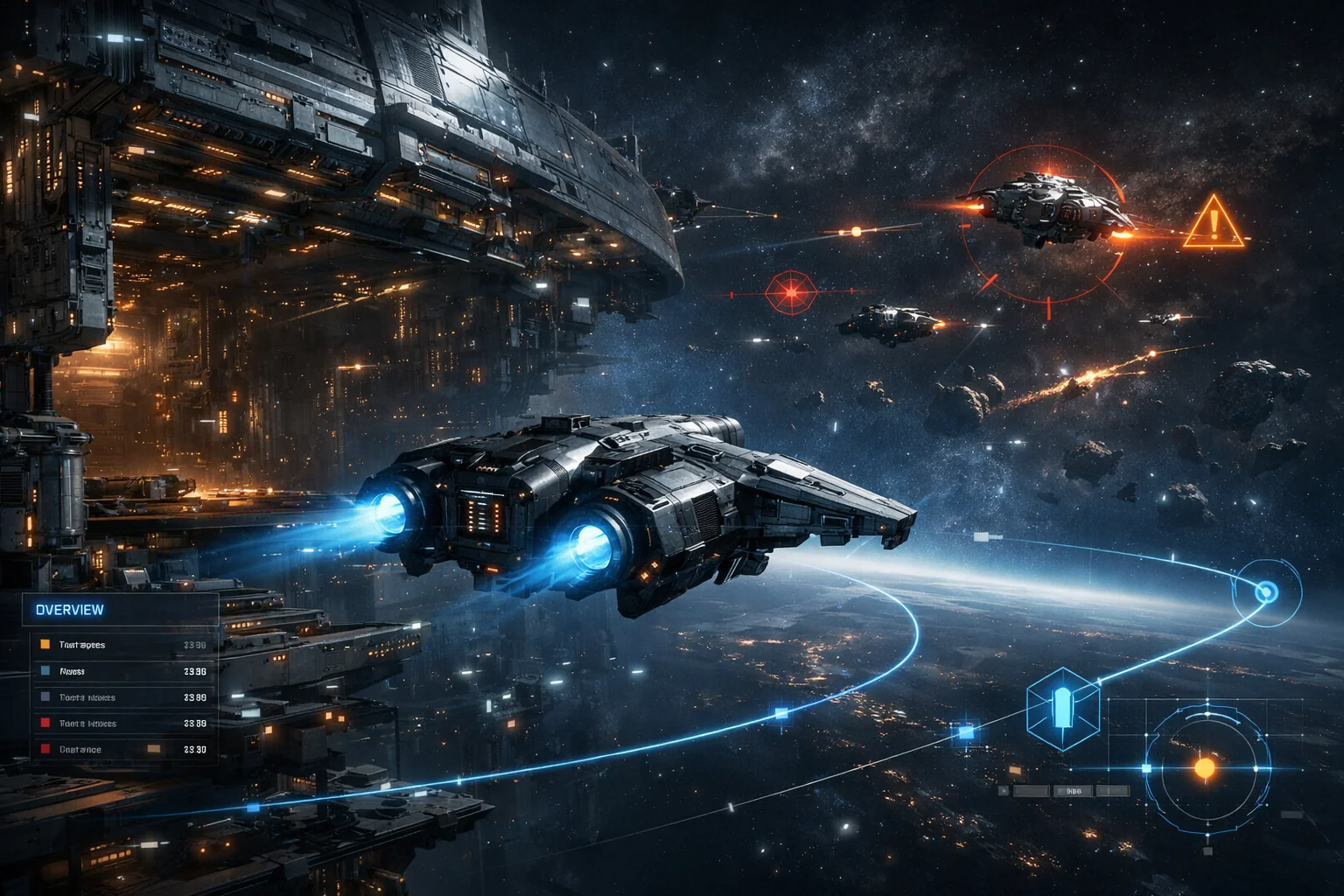
Note: The featured image is AI-generated concept art for illustration only and is not an in-game screenshot or official EVE Online artwork.
Watch the Video
The source video covers a set of sharp tactical habits that many players overlook. This article goes a step further by breaking down why those habits matter in live gameplay, where they save ISK, and where they change how fast you improve.
Why This Matters in EVE
The biggest divide in EVE is rarely raw SP or account age. It is whether a pilot understands where the real losses come from. Most losses are not mechanical failures. They are planning failures, information failures, or ego failures.
That matters because every bad habit compounds. A bad skill queue delays ships and weapons. A bad fitting habit inflates losses. A bad undock routine turns trade hubs into roulette. Small leaks become expensive very fast in a sandbox where other players are actively looking for predictable behavior.
Stop Training Like the Meta Will Never Change
One of the easiest traps in EVE is treating every Level V skill like a smart long-term investment. Sometimes it is. Often it is not. Many pilots lock themselves into multi-week training plans for marginal gains when that same time could open new hulls, new weapons, or a completely different income path.
The smarter approach is skill agility. Get broad, high-value support skills to IV first, especially the ones that carry across multiple ships and doctrines. That gives you practical performance now and keeps you flexible when your corp changes doctrine, the market shifts, or your interests move from PvE to PvP.
Level V should usually be a gatekeeper choice, not a reflex. If it unlocks something important such as T2 ammo, a key hull, or a major fitting threshold, it can be worth it. If it just adds a small percentage while freezing your progression for weeks, it is often a vanity train disguised as discipline.
Treat Skill Points Like Capital, Not Progress Bars
A lot of players claim rewards badly. They complete systems passively, let SP sit unused, and fail to think about timing. That is a strategic mistake because SP is not just progression. It is acceleration.
The practical lesson is simple: use reward systems intentionally. If a mechanic lets you stack value before claiming it under better conditions, that is not a gimmick. That is resource management. The pilots who progress fastest are usually not the ones spending most. They are the ones claiming value at the right moment.
What matters in real gameplay is what that SP unlocks. Faster access to useful support skills, T2 weapon paths, and better fitting freedom changes how quickly you can move from fragile starter habits into competent, reliable ships.
Cheap Ships Win More Than Expensive Egos
Many pilots overestimate what “bling” actually does for them. Expensive fits can improve performance, but they also change your risk profile immediately. You become a more attractive target, and every mistake becomes harder to absorb.
That is why effective pilots think in repetitions, not single hulls. A ship you can lose ten times teaches more than a ship you are scared to undock once. In practice, this means budgeting around learning volume. Cheap hulls give you more reps, more fights, and more chances to understand range control, heat, timing, and disengagement.
The hidden danger of expensive habits is psychological. Once a fit feels precious, your decision-making gets worse. You hesitate, overthink, refuse good fights, and panic when things go wrong. A cheaper ship often performs better simply because you fly it with a clearer head.
Break Predictability at Trade Hubs
High-traffic systems punish autopilot behavior. Docking normally, undocking normally, and trusting default station interactions make you readable. That is all a ganker or camp wants: a pilot who behaves exactly like the average pilot.
Bookmarks fix that because they remove the vulnerable seconds where a ship is exposed in the wrong place. An insta-dock protects valuable cargo by dropping you inside docking range instead of near it. A proper undock or warp-out bookmark does the opposite job by getting you off a dangerous station line before anyone can capitalize on your inertia.
This is one of those habits that looks minor until it saves something expensive. The strategic value is not just survival. It is consistency. When your logistics routes are less vulnerable, every hauling, trading, and staging decision becomes more efficient.
Specialize Until You Have One Reliable ISK Engine
A common mid-skill trap is trying to sample every activity in EVE at once. A little abyssal running, a little mining, a little faction warfare, a little exploration. It feels productive because you stay busy, but it usually delays mastery and keeps your income mediocre.
Specialization works because EVE rewards familiarity. When you run one activity repeatedly, you stop spending brainpower on basics and start noticing the real variables: route timing, market cycles, fit breakpoints, local threats, and opportunity windows. That is where real ISK starts.
You do not need to marry one activity forever. You just need one dependable printer. Once you have that, the rest of your EVE life gets easier. You fund PvP more comfortably, recover from losses faster, and experiment without wallet anxiety.
Your Overview Is a Weapon, Not a Preference
A messy overview kills more fights than bad aim. In EVE, the player who reads the field faster usually wins before damage numbers tell the story. If your screen is cluttered, your target calls are slower, your threat recognition is worse, and your panic threshold hits earlier.
That makes overview discipline a combat skill, not a UI preference. Separate tabs for PvP, travel, mining, and scanning reduce noise and speed up decisions. You want the minimum amount of information needed to make the next correct choice.
This matters even more for newer or returning players because they often blame themselves for “slow reactions” when the real problem is overload. Better information design creates better reactions. The overview is not glamorous, but it directly affects survivability.
Stop Building Fits From a Blank Screen
Theory-crafting is useful, but many players waste time pretending they need to invent every fit themselves. In reality, most pilots benefit more from starting with a proven baseline and learning why it works.
Community fits, corp doctrines, and established ship concepts do three things well. They save time, reduce obvious fitting errors, and give you something testable. Once you have that foundation, small changes become meaningful because you are modifying a system that already functions.
The wrong way to learn fitting is to chase originality before understanding tradeoffs. The right way is to start with structure, fly it, lose it, and then adjust based on actual outcomes. Real fitting knowledge comes from iteration, not imagination alone.
PvP Is the Fastest Way to Build Useful Nerves
Many players treat PvP as a late-game activity they will start once they feel ready. That is backwards. PvP is one of the fastest ways to build the muscle memory that makes every part of EVE safer.
Cheap, disposable fights teach calm under pressure. You learn when to overheat, when to commit, when to leave, and how quickly a situation changes once another pilot starts forcing decisions. PvE can teach mechanics, but it rarely teaches composure.
That composure carries everywhere. A pilot who has survived messy low-cost PvP is harder to rattle in a gate camp, less likely to freeze under tackle, and more realistic about risk. The point is not to become a killboard addict. The point is to stop becoming easy prey when someone else starts the fight.
Progress Faster by Comparing Yourself Correctly
One of the most damaging habits in EVE is comparing your account to someone who has been compounding advantages for a decade. That comparison is emotionally loud and strategically useless.
A better benchmark is whether your decisions are improving. Are your losses getting cheaper? Is your income getting steadier? Are you spending less time confused in station? Are your skill plans opening options instead of closing them? That is what actual progress looks like.
This mindset matters because EVE rewards patience, but not passivity. You do not need to catch veterans. You need to stop feeding the same avoidable mistakes to players who already understand the systems better than you do.
Quick Checklist for Becoming Harder to Punish
- Train broad support skills before committing to long Level V detours
- Keep at least one reliable, repeatable ISK activity as your financial base
- Practice new tactics in cheap hulls before risking expensive ships
- Set up insta-dock and undock bookmarks in systems you use often
- Clean your overview so you only see what matters for the task at hand
- Start from proven fits, then iterate from real experience
- Use low-cost PvP to normalize loss and improve decision-making
The Strategic Layer
The deeper pattern behind all of these ideas is that EVE rewards pilots who reduce self-inflicted friction. The best players are not just “better at the game.” They are better at removing waste from the game. They waste less SP, less ISK, less attention, and less emotional energy.
There is also a strong psychological angle. Over-blinging, overtraining, and over-theory-crafting often come from the same place: trying to feel secure before taking action. In EVE, that instinct often backfires. You learn more from exposure than from overpreparation.
Efficiency matters because time is part of the economy too. Most players are balancing work, family, or other games. That means smart shortcuts are not laziness. They are competitive tools. A proven fit, a cleaner overview, or a safer bookmark chain can create more real progress than another week of passive planning.
The practical takeaway is simple: stop trying to look advanced and start building systems that make you hard to punish. In New Eden, that is what real competence looks like.
Related EVE Guides
- Best EVE Online Ships for New PvP Pilots
- How to Make ISK Consistently in EVE Online
- EVE Online Skill Training Priorities for Faster Progress
Conclusion
The pilots who improve fastest in EVE Online are usually the ones who stop feeding the game expensive habits. They train with flexibility, fly with intent, and build routines that make them less predictable and more resilient.
That is the real shift. Not becoming richer overnight or instantly elite, but becoming harder to exploit every time you undock. Which one of your current habits is making you easier to punish than you think?
Save this post for later, then explore more EveExplorer guides to sharpen your next move in New Eden.